Why orthodontic treatment
Orthodontics corrects how teeth sit and how the upper and lower jaw meet. Properly aligned teeth are easier to clean, wear more evenly over time, and distribute biting forces in a balanced way. For many patients, there is also a meaningful improvement in appearance and confidence.
We treat both children and adults. In children, early intervention at the right developmental moment is often simpler than waiting. In adults, modern orthodontic options make treatment practical at any age.
Treatment options
The two main approaches are fixed braces and clear aligners. Fixed braces use small brackets bonded to each tooth, connected by a wire that guides teeth into position. Modern brackets are smaller and less conspicuous than they once were.
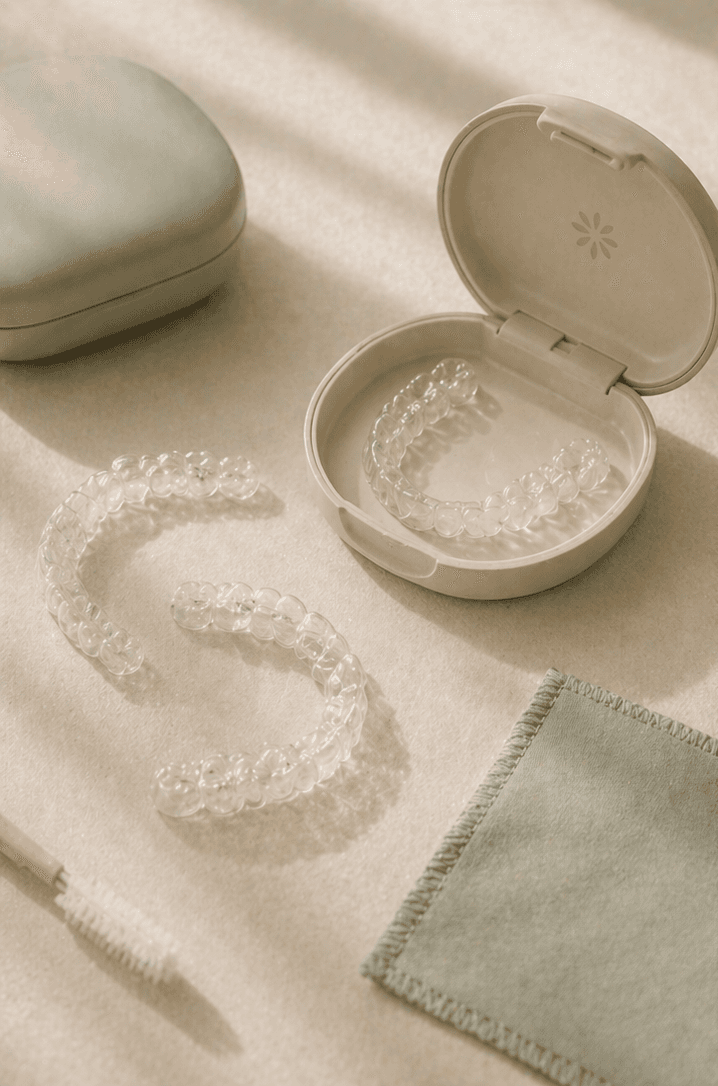
Clear aligners — a series of thin, nearly invisible trays worn over the teeth — are changed every one to two weeks. They are removed for eating and brushing, which makes hygiene easier. Not every case is suitable for aligners; at the consultation we assess your specific situation and explain what will work best.
The treatment journey
After an initial consultation and diagnostic records, we present a written plan: treatment approach, expected duration, cost, and a realistic preview of the end result. Appointments every four to six weeks track progress and make adjustments.
At the end of active treatment, retainers are essential. Teeth have a natural tendency to shift back toward their original positions, and retainers — usually a combination of a fixed wire behind the front teeth and a removable clear retainer — hold the result in place. We follow our orthodontic patients into retention and review long-term.