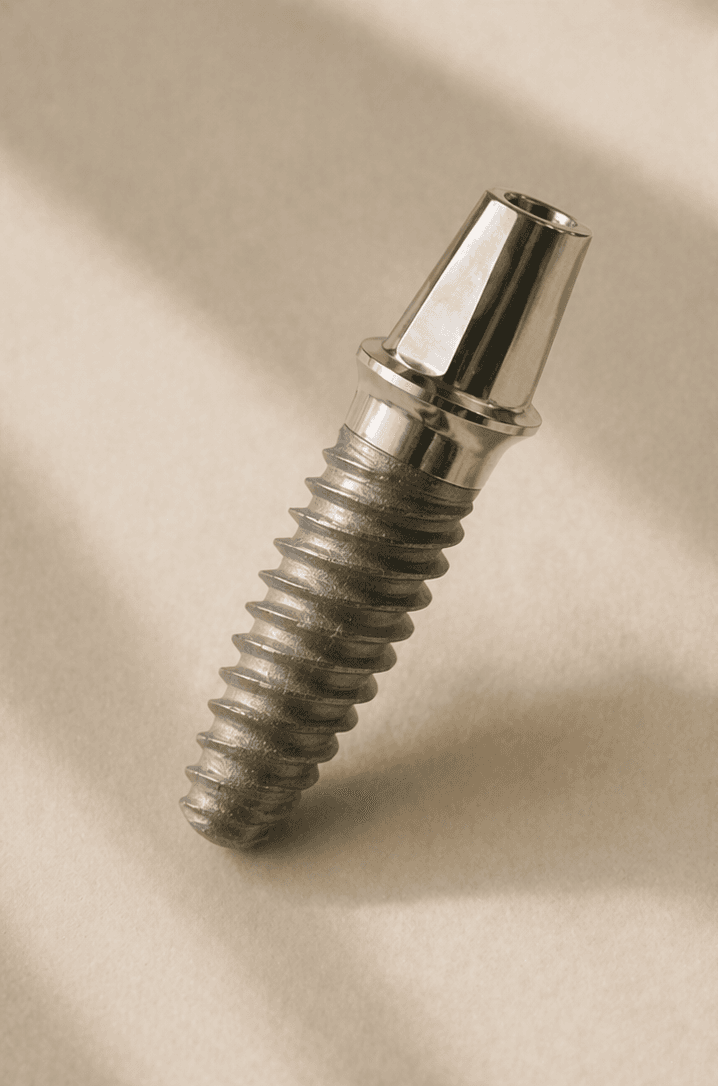
What dental implants are
A dental implant is a small titanium screw that integrates with the jawbone over several months, forming a stable foundation for a replacement tooth. Once integrated, a custom crown is attached on top. The result looks, feels and functions like a natural tooth — and crucially, preserves the surrounding bone, which otherwise resorbs after tooth loss.
Implants are the gold-standard replacement for single or multiple missing teeth, and are also used to support bridges and stabilise dentures in larger cases.
The planning stage
Careful planning is what separates a successful implant from one that causes problems. We take a 3D scan of the jaw to assess bone volume, density and the position of nerves and the sinus. Using planning software, we determine exactly where the implant should sit, at which angle, and what size is optimal.
In some cases, bone grafting is needed to build up an area where bone has already resorbed. This is discussed openly at the planning stage, with a realistic timeline.
Surgery and healing
The surgery itself takes about an hour under local anaesthesia and is more comfortable than most patients expect. After placement, the implant is left to integrate with the bone for three to four months in the lower jaw, four to six months in the upper jaw.
Once integration is confirmed, an abutment is placed and the custom crown is fitted. From that point, you simply brush and floss it as you would any other tooth — with regular professional cleanings to keep the surrounding gum healthy.
Long-term outlook
A well-planned, well-placed implant in a well-maintained mouth can last decades. The key is consistent hygiene and regular professional reviews. We follow our implant patients long-term and take responsibility for the work we place.